Narrator: Thomas August
Interviewer: Skye Doney
Date: 8 February 2026
Format: Text only via email
Thomas August biography:
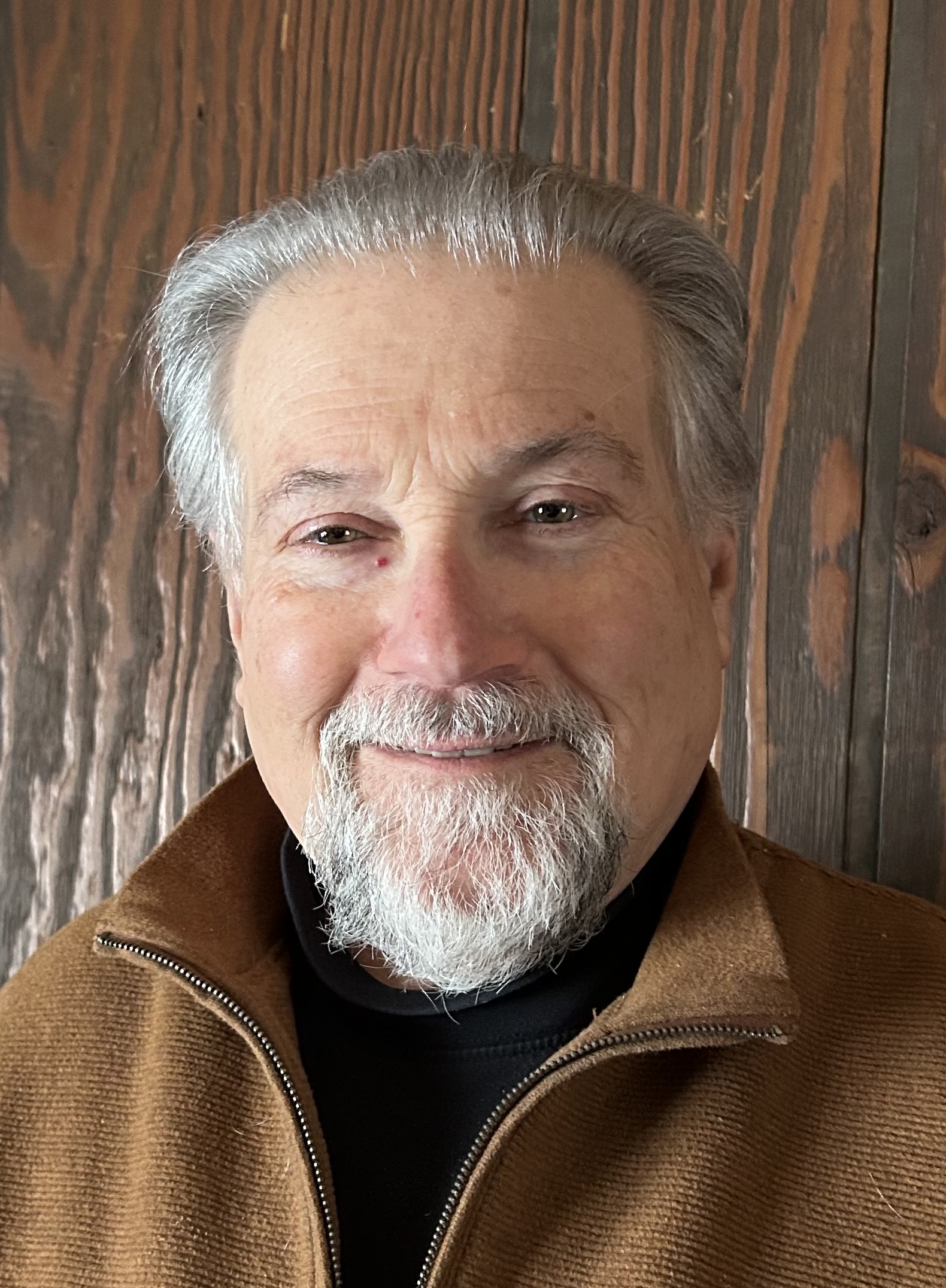 I was born in Milwaukee in 1950. My maternal ancestors were Jews from the Rhineland and my paternal ancestors were Jews who arrived from various parts of the Russian Empire. Yiddish phrases were heard around the house growing up, especially when my grandmother lived with us.
We were among the many families who made up the white flight to the suburbs in the mid-1950s. I graduated from Whitefish Bay High School in 1968, completed my first year of college at UW-Milwaukee before transferring to Madison, where I graduated at the end of 1971.
My graduate work began at LSE, where I earned an MA in 1973. I returned to Madison where I completed my PhD in 1978 under the supervision of George L. Mosse. Between 1979 and 1986, I taught early modern and modern European history at the University of the West Indies- Mona in Jamaica, where I earned tenure and promotion to associate professor.
After leaving Jamaica for financial reasons, I taught modern European, World, and Jewish history on a temporary basis at The Johns Hopkins University, Hamilton College, the University of Wisconsin-Milwaukee, San Diego State University, Carroll University, Cardinal Stritch University and lastly at UW-Madison in 2014. Greenwood Press published my first book in 1985 entitled The Selling of the Empire: British and French Imperialist Propaganda, 1890-1940. In 2013, AMS Press published my monograph on race and ethnicity in Milwaukee from 1880 to 2000: From Assimilation to Multiculturalism: Managing Ethnic Diversity in Milwaukee.
Background
I was born in Milwaukee in 1950. I remember fondly those early years with my parents and two brothers. We lived in an apartment building on 16th and Wisconsin where Marquette University is located. We didn’t have much in terms of money. If we wanted to watch the Friday Night Fights, for example, we would walk down the hallway to where one of our fellow tenants had a television. But our lives seemed full and rich with regular trolley rides to the Washington Park Zoo or a short walk to the beautiful Milwaukee Public Library, which then housed the outstanding natural history collections of the Public Museum. A few blocks further east on Wisconsin Avenue awaited the toy department at the Boston Store, where we could play with all the wonderful attractions we would never own. All along Wisconsin Avenue one could go to any number of movie palaces but it was the Riverside Theatre (now a site for live entertainment) that especially enchanted me.
We moved to Whitefish Bay in 1955, when I entered first grade. I did not know at the time that we were living in a very privileged area, but I would understand what people meant by the phrase “White Folks Bay” by the time I graduated from the high school. Facilities and faculty were of high quality as I recall my elementary years, but nobody on the high school staff really stood out other than Jack Nagel who taught first year English composition. Whitefish Bay HS was supposed to be a top public school, but the overall learning experience was negligible. I did my homework, earned good grades but developed no love of learning until I came to UW-Madison as a sophomore. Paul Simon said it so well in the opening line from his song Kodachrome.
Our family usually had dinner while watching the nightly news. One could not look away from developments in Vietnam or the Civil Rights Movement. The Milwaukee Riot of 1967 was a watershed moment for anyone living in the area at the time. While the violence and the deployment of the National Guard were centered in the black community, the curfew throughout the larger Milwaukee area affected everyone profoundly. I would describe myself at this time as a liberal on civil rights and definitely an opponent of American foreign policy, whether in Cuba, the Dominican Republic but especially Vietnam. Madison turned me into a permanent progressive.
My original major was in political science with law school as my focus for further study. I began to become interested in European history because of my older brother who was attending UW-Madison at the time. He told me about Mosse and Goldberg and from that point on, I was hooked. I took all of their courses. Other faculty that impressed me at the time were Norman Risjord (1931-2019), David Herlihy (1930-1991), and Peter Smith. In other departments, I was blessed to have Seymour Abrahamson (1927-2016) in Genetics, Ward Bissell (1936-2019) in Art History, and a team-taught course in Political Science by Donald Hanson (1933-2018) and Booth Fowler (1940-2024). Great lecturing should not be equated with great teaching however. It was often the more junior members of staff who were the better teachers. This was true of the teaching assistants as well. The TAA should be singled out in this regard. When I later became a teaching assistant and joined the union, I appreciated the interest they took in matters of teacher development. No one else did.
Graduate Training
I had initially wanted to continue at Madison for my Masters Degree but Professor Mosse, with whom I hoped to complete my MA, thought it would be better to have at least one degree from another university. I decided I wanted to be in London, and so I attended the London School of Economics and Political Science. LSE was one of the few institutions that then offered a one-year MA. I had an exciting time there in spite of the graduate program, which was in diplomatic and international history. Great power diplomacy was not my forte or interest. Neither did my Madison education provide me with sufficient background or competence in diplomatic history.
I returned to Madison to begin doctoral work under the direction of Professor Mosse. George was a great lecturer who cultivated warm relations with his undergraduate and graduate students. I also had the bittersweet pleasure of being his TA at a time when George was going through a tough time of it physically. That said, George was not a conscientious dissertation director. In my case and in others, George would not look at a thesis until it was completed. I button-holed him one day and said that I have the first three chapters done and I want you to look at my work. Once he finally got around to reading it, George offered valuable criticism, comments that would been much more helpful if received a year or two earlier. He also failed in keeping many of his students “on track.” He was not singularly negligent in this regard, as stories about supervisory neglect circulated the rumor mill among the graduate students. In addition, it was rumored that certain professors would fail some students on their prelims simply because they didn’t like the students’ advisors. One had to be mindful of these petty concerns in forming a committee for readers and non-readers for one’s oral exam. This kind of institutional miasma that pervaded the History Department existed elsewhere on campus. Part of my minor was in Comparative Literature, where a civil war between Marxists and semiologists was so intense that I was told that the college dean had to run the department for them. (I did not know at the time if there was any truth to such rumors, but my experience with intellectual intolerance in a seminar on Joyce and post-Joycean literature led me to give some credence to the assertion.) As great a place as the university and the History Department were at that time, the academic atmosphere could be emotionally and intellectually stifling.
One individual whom I shall mention showed that it was possible to be a brilliant academic and a mensch at the same time. Jan Vansina (1929-2017), one of the greatest scholars and teachers of African history, generously agreed to be a reader of my dissertation without any prior awareness of my existence. I introduced myself one day and asked if he would care to join my committee as a reader. He said yes without hesitation, read my material promptly and sent me his insightful comments posthaste. There should have been more people like him, but that would have been like looking through the proverbial haystack.
As teaching assistants, we had the benefit of a great union which addressed our grievances and helped us prepare for our future in the classroom. Memorable were the battles between the teaching assistants and the department chairpersons, be they arch conservatives such as Ted Hamerow (1920-2013) or more liberal-minded managers such as Peter Smith. When it came to running the department, it was all about authority so it really didn’t matter if the Head were liberal or not.
The graduate students generally were extremely capable and in many cases simply brilliant. Being in the TAA introduced me to colleagues from many other academic departments. A number of history students became close friends of mine but I especially want to mention Joel Truman, Pete Gordy, Laurence Baron, and Victor Treschan, all of whom were Mosse students.
One of the highlights of my graduate education occurred in 1975 or 1976 when I participated in a seminar led by Edward Said (1935-2003) at the invitation of the Department of Comparative Literature. Said was about to publish his landmark study on Orientalism, and we in the seminar were privileged to hear the ideas of and engage in dialogue with a seminal figure of that time. I was already focusing much of my doctoral work on the representation of what Said would refer to as the Other, and I found his methodology invaluable for my dissertation. That interest would follow me throughout my scholarship.
Madison: The University and the City
My undergraduate and graduate years were greatly enriched by the quality of classes and the resources available at UW Libraries. But my extracurricular education was perhaps more valuable: the demonstrations and strikes on the campus, the amazing network of co-operatives on and off campus, the abundance of film societies, and the cultural and recreational offerings of the Memorial Union , where I spent as much time as any apartment I rented.
From the moment I arrived in Madison, I lived in a beautiful environment at Tripp Hall and the nearby lake path, which led either to the Union or to Picnic Point. Over the years I lived in Madison, I came to appreciate the beauty of the city, its parks, the Arboretum and the many stunning areas within a short drive from town.
The 1970s and Beyond
As graduate students, we were very much aware of an ever-worsening job market for newly-minted PhDs. There were just so many of us. I cannot recall exactly how I felt at that time, but I never regretted going down a path that could well have turned out to be a cul-de-sac. Perhaps we were anticipating the advice from Joseph Campbell : “Follow your bliss.” Today’s employment picture is probably even worse now, so it takes the same kind of passion for today’s graduate student that we summoned in our time.
Fortunately, I did find a tenure-track position within six months after receiving my doctorate. I would soon be going to Jamaica to take up my teaching responsibilities at the main campus of the University of the West Indies. It took some time to overcome my initial trepidations about how I, as a white American, would be perceived in a country then undergoing political strife. But those concerns quickly passed. I gained so much from my residence there. Prior to living in Jamaica, I had known of imperialism only in the abstract and as something I researched. Living in Jamaica made all of that very real and concrete. The UWI faculty was quite diverse in terms of geographic origin, and the students came from all fourteen contributing nations of the West Indies. The History Department and the University generally was understandably Caribbean-centric in its research and course offerings. Our department included such luminaries in Caribbean history as Elsa Goveia (1925-1980), Douglas Hall (1920-1999), and Barry Higman.
The times were economically taxing, and it became clear by my third or fourth year that I would not have much of a financial future in Jamaica. I had the opportunity to participate in a Fulbright Exchange program with The Johns Hopkins University in 1987. I was there only one semester but greatly enjoyed the teaching and my conversations with fellow faculty such as Robert Forster (1926-2020), Orest Ranum, the ex-Badger Philip Curtin (1922-2009) and other members of a very distinguished department. What most impressed me at Hopkins was the way the University served the graduate students in contrast to Madison, where the students more served the university. Hopkins supported their students financially and prepared them in every possible way for teaching and scholarship. Hopkins was very much the anti-Wisconsin in many important respects.
It proved challenging to transfer to a tenured associate professorship and from that point on I only taught on a temporary basis. I greatly enjoyed my time in California at San Diego State and Cal Poly and at UW-Milwaukee. I had the good fortune to return to Madison in 2014 and teach a history course at where else but the Mosse/Weinstein Center for Jewish Studies. I never could escape George’s reach! One real positive finding I can report is that the students I had were the best undergraduates I had taught since my time as a teaching assistant in Madison in the late 1970s. So in spite of some of my negative comments, I can honestly conclude that UW-Madison does manage to do some things very well.